Welcome to our used car market research hub for Furnas NE. If you are comparing prices on a truck for gravel roads near Cambridge or a fuel efficient sedan for highway commutes between Arapahoe and Oxford, this page gathers data driven insights to help you buy with confidence. Explore typical price ranges, mileage expectations by vehicle class, and small town supply and demand factors that shape the Furnas County market. We also explain how to spot value using trim features, maintenance history, and Nebraska title records. Use this guide alongside our current Used Inventory and recently Sold Inventory to benchmark fair deals in real time. For deeper tips and how tos, visit our Blog and local Car Buying Guides. With clear research steps and regional context, you can match the right vehicle to your budget and daily miles throughout Furnas County.
This page is designed to translate statewide trends into practical next steps for shoppers in Furnas NE. You will learn how inventory seasonality, rural driving needs, and Nebraska paperwork requirements influence real world pricing. We include checklists for evaluating condition, tips for comparing trims and options, and ways to use our market snapshots to identify a strong purchase decision. Keep this resource open while you browse.
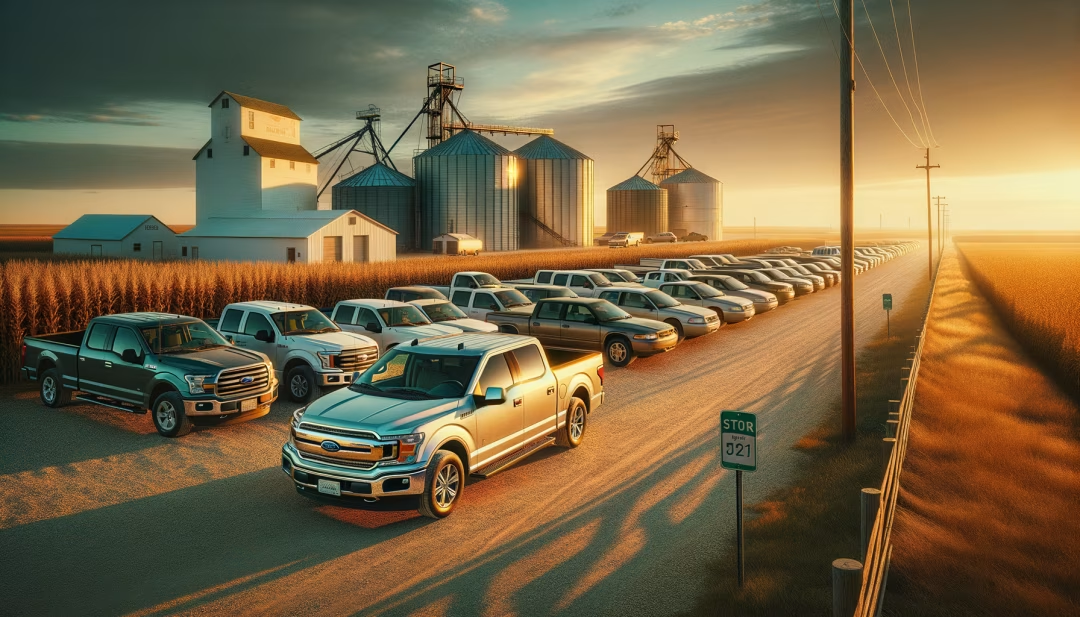
Furnas County driving spans town miles in Beaver City and Cambridge to rural routes where pickups and all wheel drive crossovers make daily life easier. That mix affects what is in demand and how vehicles are priced. Trucks and body on frame SUVs often carry a pricing premium when they show strong service records and manageable rust. Commuter sedans and compact SUVs remain solid values for highway runs on the US 6 and 34 corridor and for drivers watching fuel costs. Because the local market is smaller, asking prices can vary more from vehicle to vehicle than in big metro areas. Careful model level comparisons, a look at option packages, and a review of maintenance paperwork are key.
Use these broad ranges as a starting point. They reflect common listings across south central Nebraska and neighboring counties. Final pricing depends on model year, trim, options, condition, history, and mileage.
In Furnas NE, utility and condition often outweigh styling. Demand for four wheel drive vehicles typically rises ahead of winter and during planting and harvest cycles. After holidays, inventories can reset as trade ins arrive. Watch for modest price softening in late winter when weather slows foot traffic. Conversely, clean trucks with snow ready tires can command a premium as the first cold fronts move in. If you are flexible on color or trim, shopping just after major model year changeovers can also help you find value.
Start with our live Used Inventory for current pricing, then compare to similar vehicles in our Sold Inventory. Sold records provide directional benchmarks for mileage adjusted market values. When a model has sold quickly at a certain price point and spec, that suggests strong demand. If similar vehicles lingered, there may be room for value seeking. Use our Blog for deep dives on trims, reliability notes, and Nebraska ownership costs.
Many Furnas County vehicles see mixed use. Inspect carefully to understand prior duty cycles and upcoming maintenance. Bring this checklist with you.
A clean Nebraska title with consistent owner history generally signals lower administrative risk. When you read a vehicle history report, focus on mileage consistency, accident severity descriptions, airbag deployments, and recurring damage entries. For out of state vehicles, confirm that VIN plates and title numbers match. Flood damage and salvage history deserve extra scrutiny. Ask for recent maintenance invoices to corroborate long life items like timing belt service, spark plugs on direct injection engines, transmission services, and cooling system care.
Your rate, term, and down payment can change your effective market price more than a small difference in asking price. A slightly higher price with a shorter term and lower rate can cost less overall than a lower price with a long term and higher rate. If you are exploring approvals, see our regional resources for Used Car Financing and Second Chance Auto Financing. Compare APR, total interest paid, prepayment policies, and the effect of adding service contracts or GAP. Always evaluate the out the door figure including taxes, title, registration, and any documentation fees.
Beyond the purchase price, estimate fuel, insurance, tires, and preventative maintenance. Rural routes can add miles quickly, so prioritize vehicles with durable drivetrains and affordable tire sizes. Insurance can vary with safety equipment and trim. If you regularly tow, factor transmission fluid services and brake wear into your annual budget. Set aside a maintenance reserve for items due between 80,000 and 110,000 miles, such as struts, control arms, and spark plugs on many models.
In small markets, the best time is when the right vehicle appears. Still, a few windows tend to be helpful. Late winter can bring negotiable pricing as weather slows shoppers. End of month or quarter may see dealers ready to move aging inventory. After model year changeovers, prior year trims with similar equipment can be attractively priced. Use our Sold Inventory to anchor realistic targets, then adjust for mileage, options, and condition differences. When a vehicle is well priced for the region, acting promptly can prevent missing the fit.
When comparing two similar vehicles, list the must have features that affect your daily use. If you live on gravel, AWD or 4x4, all weather mats, and rust protection may be non negotiable. For frequent highway use, adaptive cruise, lane keeping, and better headlight tech are worthwhile. Create a quick scorecard that assigns points to drivetrain, safety tech, tow rating, and maintenance records. A slightly higher price that checks all boxes often yields lower overall cost through fewer compromises and better resale later.
Expect state and local sales tax, title, and registration fees based on your address in Nebraska. You will need government issued identification, proof of insurance, and accurate lienholder information if financing. If you are transferring plates, ask about timelines and any inspection requirements. Keep copies of the bill of sale and any service contracts. Review the buyers guide window form for warranty status and coverage details, and retain signed copies for your records.
Turn your notes into a shortlist by matching budget, features, and expected miles per year. Pull example comps from our Used Inventory, then sanity check prices against recent entries in Sold Inventory. Adjust your targets for mileage differences at roughly a few cents per mile depending on segment, then add or subtract for options like AWD, tow, and advanced safety. If two vehicles are close, pick the one with cleaner history and better documented maintenance, especially for rural duty.
If you travel or shop across county lines, compare market notes from neighboring research pages to understand supply nearby:
Explore these pages for more guidance, policies, and shopping tools: